


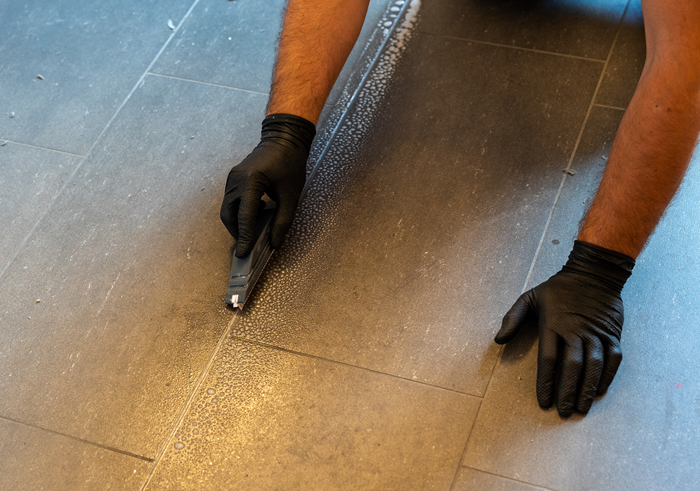
Tile bathrooms are popular for a reason. Tile handles moisture well, holds up to daily use, and gives bathrooms a clean, polished appearance. However, tile itself is only part of the system. The narrow lines between the tiles, known as grout, play an equally important role in how a bathroom looks and how well the surfaces hold up over time.
Grout often gets less attention during regular cleaning routines, even though it is the part of the surface that tends to collect buildup the fastest. Tile faces are usually smooth and sealed, which allows water and cleaning products to slide across the surface without much absorption. Grout, on the other hand, contains porous materials that can absorb moisture and residue.
That difference explains why grout lines tend to darken or discolor faster than the tile surrounding them.
Bathrooms create the perfect environment for buildup to develop gradually. Showers and tubs introduce water multiple times a day. Soap, shampoo, and body products add oils and residue to the surfaces. Minerals in household water can leave deposits behind as water evaporates. Over time, these elements collect along grout lines where small particles settle into the porous material.
This process happens slowly enough that many people do not notice it until grout lines change color or begin to look uneven.
Regular cleaning of tile surfaces helps maintain the appearance of a bathroom, but grout requires a little more attention because of the way it absorbs moisture. Small cleaning tools or soft brushes often work best for reaching the spaces between tiles. Gentle scrubbing can help lift residue that collects within the grout joints.
Cleaning solutions designed for tile and grout surfaces can also help loosen buildup. These products break down soap residue, oils, and mineral deposits that gather in areas exposed to frequent moisture.
Bathrooms with high humidity levels can accelerate the buildup process. Warm showers release moisture into the air, and without proper ventilation that humidity can remain in the room for extended periods. When moisture lingers, it increases the amount of time that grout stays damp.
Damp grout tends to attract and hold particles from the surrounding environment.
Ventilation plays a surprisingly important role in tile maintenance. Bathroom fans and airflow help remove moisture from the room after showers and baths. When surfaces dry faster, there is less opportunity for residue to settle into grout lines.
Certain areas of a bathroom usually require extra attention during cleaning. Corners of showers, edges of floors, and areas near plumbing fixtures tend to receive the most frequent water exposure. These spots often show the earliest signs of buildup.
Tile installations are designed to last for many years, but the condition of grout lines often determines how fresh and clean the entire surface appears. Even beautiful tile can begin to look tired when grout lines darken or collect residue.
That is one reason grout cleaning plays such an important role in overall bathroom maintenance.
Another factor that affects grout appearance is the mineral content in household water. Water containing higher levels of minerals can leave behind light-colored deposits along tile and grout surfaces. These deposits may appear as cloudy residue or faint streaking around frequently used fixtures.
Cleaning methods that address mineral buildup can help restore the appearance of grout lines without damaging the surrounding tile.
Grout sealing represents another step that supports long-term maintenance. Sealers create a protective layer over the grout surface that helps reduce the amount of moisture absorbed by the material. By limiting absorption, sealers can help slow the rate at which stains and residue settle into grout lines.
Sealing does not eliminate the need for regular cleaning, but it can make maintenance easier over time.
Different types of grout may require slightly different maintenance approaches. Cement-based grout, which is common in many tile installations, tends to be more porous than newer synthetic grout options. Because of that porosity, routine cleaning helps maintain the surface condition.
The goal of grout cleaning is not only appearance but also preservation. Clean grout helps maintain the integrity of the tile installation itself. Grout holds tiles in place, absorbs minor movement within the structure, and helps prevent water from reaching surfaces beneath the tile.
When grout remains in good condition, the entire tile system performs better.
Bathrooms remain one of the most frequently used spaces in any home. Daily use naturally introduces moisture, personal care products, and cleaning solutions into the environment. These elements interact constantly with tile and grout surfaces.
Consistent cleaning routines help manage that environment.
A bathroom does not require complicated maintenance to stay in good condition. Regular attention to tile surfaces, grout joints, and ventilation can make a noticeable difference over time. Small cleaning efforts performed consistently often prevent the need for more extensive restoration later.
Grout may not be the most noticeable feature in a bathroom when everything is clean, but its role becomes obvious when maintenance is neglected.
Keeping grout lines clean helps maintain the fresh appearance of tile installations while supporting the long-term durability of the surfaces themselves. In many cases, the difference between a bathroom that feels freshly maintained and one that feels worn down comes down to the condition of those narrow lines between the tiles.
A little attention to grout goes a long way in keeping the entire space looking the way it was meant to look.

