


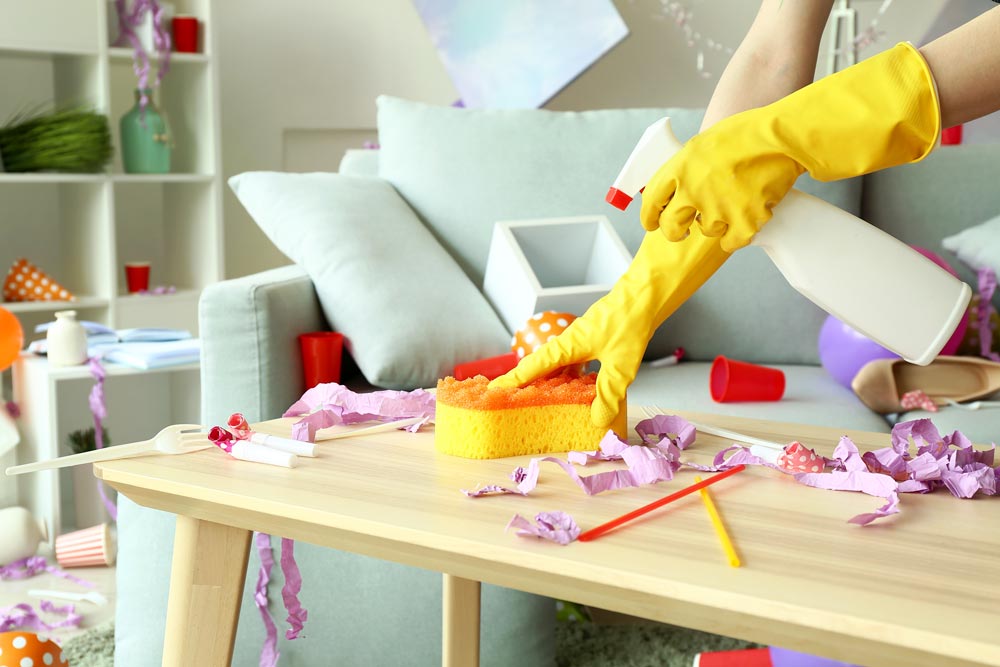
Anyone who has ever hosted an event knows the moment. The guests leave, the music stops, and the room finally gets quiet enough to hear the truth. Cups everywhere. Floors that feel sticky for reasons nobody wants to investigate. Trash cans that somehow filled up three hours ago and kept going anyway. Cleaning up after an event isn’t about perfection. It’s about recovery.
The biggest mistake people make after events is starting in the wrong place. Panic cleaning leads to wasted effort. Professional cleanup starts with assessment. A quick walk-through shows where the real damage is. Kitchens, restrooms, food service areas, and entryways almost always take the hardest hit. Those spaces set the tone for everything else and need attention first.
Trash removal always comes before cleaning. Trying to mop around plates, cups, decorations, and half-empty containers turns a simple job into an obstacle course. Clearing trash opens up floor space and prevents debris from being pushed into corners where it will reappear later. Separating waste and recyclables at this stage also makes the rest of the process smoother.
Once surfaces are cleared, the real cleaning can begin. Tables, counters, and staging areas collect spills quickly during events. Wiping these areas down early prevents residue from drying and becoming harder to remove. Sticky surfaces are not just unpleasant; they attract more dirt and make the entire space feel unclean even after floors are done.
Floors tell the story of the night better than anything else. Hard floors usually need sweeping or vacuuming before any wet cleaning starts. Skipping that step spreads debris and turns crumbs into sludge. Sticky beverage residue requires proper cleaners designed to break down sugars and oils without leaving film behind. Film buildup is one of the fastest ways to make a clean floor look dirty again within hours.
Carpeted areas need fast attention. Spills that sit too long turn into stains that won’t budge easily. Prompt vacuuming removes surface debris, while spot treatment addresses problem areas before they set. Even when deep cleaning isn’t required, quick intervention makes a noticeable difference in appearance and odor.
Restrooms deserve focused attention after events. High traffic means heavy contact with surfaces that need disinfecting. Fixtures, counters, handles, and touchpoints should be addressed before floors to avoid recontamination. Odor control matters just as much as surface cleanliness here. A clean restroom that smells off still feels unfinished.
Kitchen and food prep areas require extra care. Grease, food residue, and spills tend to spread farther than expected. Degreasing agents designed for these environments work better than general cleaners and protect surfaces over time. Cleaning should move from cleanest areas toward dirtiest zones to avoid transferring residue where it doesn’t belong.
Air quality is often overlooked during post-event cleanup. Cooking, drinks, and large groups leave behind odors and airborne particles. Ventilation helps reset the space faster than masking smells. Checking filters and allowing fresh air circulation improves comfort and makes the space feel truly recovered rather than temporarily covered up.
Efficiency comes from sequence, not speed. Cleaning top to bottom prevents dust and debris from undoing work below. Dry tasks should always come before wet cleaning. Following a logical order reduces the need to redo areas and shortens overall cleanup time. This is where professional routines save hours compared to random effort.
The right tools matter. Commercial-grade vacuums, microfiber systems, and surface-appropriate products deliver better results with less effort. Using the wrong product can damage finishes, create residue, or extend drying times. Cleaning should restore surfaces, not shorten their lifespan.
Safety is part of professional cleanup, even when everyone just wants to go home. Wet floors, broken glass, and overfilled trash bags create hazards. Clear signage, proper footwear, and careful handling reduce injury risk and keep the process moving without interruptions.
Documentation becomes important in commercial spaces or venues used frequently. Noting problem areas helps refine future cleanup plans. Patterns appear quickly when the same types of mess show up after every event. Preparation improves response time and reduces surprises.
Large events benefit from having a cleanup plan before the first guest arrives. Checklists, supply staging, and assigned tasks turn chaos into controlled recovery. This approach scales well, whether the event was small or packed wall to wall.
Post-event cleaning isn’t about making a space sparkle for show. It’s about restoring function. A room should be safe, sanitary, and ready for whatever comes next. That means floors that aren’t slippery, surfaces that don’t feel questionable, and air that doesn’t remind anyone what was served.
Events bring energy into a space. Cleaning afterward brings balance back. When cleanup is approached with structure and intention, recovery happens faster and more thoroughly. The mess disappears, the space resets, and everything feels ready again.
That quiet moment after cleanup, when the room finally looks like itself again, is the real finish line.

